
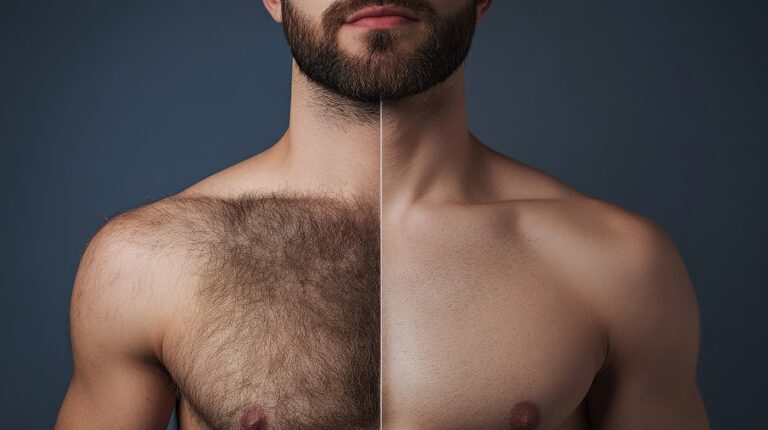
Men should prepare for laser hair removal by avoiding tanning and root-removal methods in the weeks before treatment, shaving the treatment area about one day before the appointment, reviewing medications and skincare with the provider, and arriving with clean, product-free skin. Proper preparation for men’s laser hair removal is especially important on areas with dense, coarse hair, such as the back, chest, shoulders, neck, abdomen, and beard line, because irritated skin or long surface hair can make treatment less comfortable and may interfere with safe laser settings.
Men should stop waxing, plucking, sugaring, threading, electrolysis, and epilating the treatment area for at least four weeks before laser hair removal. Laser hair removal works by delivering light energy toward pigment associated with the hair follicle, so removing hair from the root leaves less useful target material for the laser. Shaving is different because shaving removes hair above the skin while leaving the follicular structure below the surface available for laser hair removal.
Men should avoid tanning beds, intentional sunbathing, and sunless tanning products before laser hair removal because recently tanned skin contains more pigment that can compete with the pigment in the hair. Increased epidermal melanin can require more conservative laser hair removal settings and can increase the risk of burns or temporary pigment changes. Men who work outdoors, play outdoor sports, or regularly expose the chest, shoulders, neck, or back to sunlight should tell the laser provider about recent sun exposure rather than assuming a tan is insignificant.
Men preparing for laser hair removal should use broad-spectrum SPF 30 or higher on exposed treatment areas such as the neck, shoulders, arms, face, and chest. Sunscreen does not make a fresh tan irrelevant, but consistent UV protection reduces unnecessary changes in skin pigmentation before laser hair removal. A recent beach trip, tanning session, or significant sunburn should always be disclosed before treatment because the safest laser settings may differ from those used on untanned skin.
Men should generally shave the treatment area about one day before laser hair removal unless their provider gives different instructions. Laser hair removal does not require visible long hair above the skin; excessive surface hair can absorb energy, create additional heat and odor, and make treatment less comfortable. Shaving leaves the portion of the hair below the skin intact while reducing unnecessary hair above the surface.
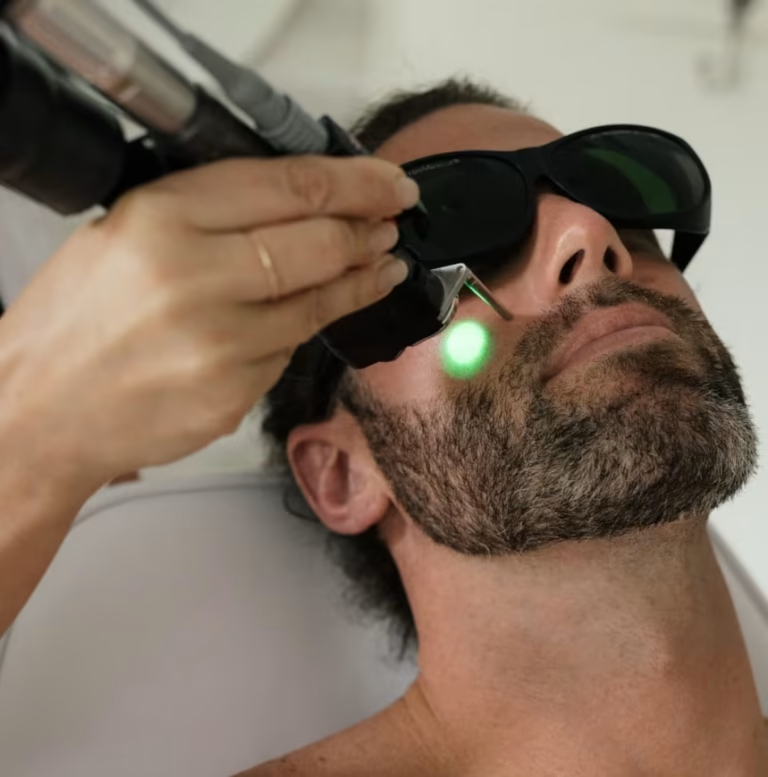
Men should prioritize intact skin over an aggressively close shave before laser hair removal. A clean, sharp razor, shaving gel, light pressure, and shaving in the direction of hair growth can reduce razor burn, nicks, and inflammation before laser hair removal. Men who routinely develop severe razor bumps should tell the provider and may be advised to shave slightly earlier rather than repeatedly passing a razor over already irritated skin.
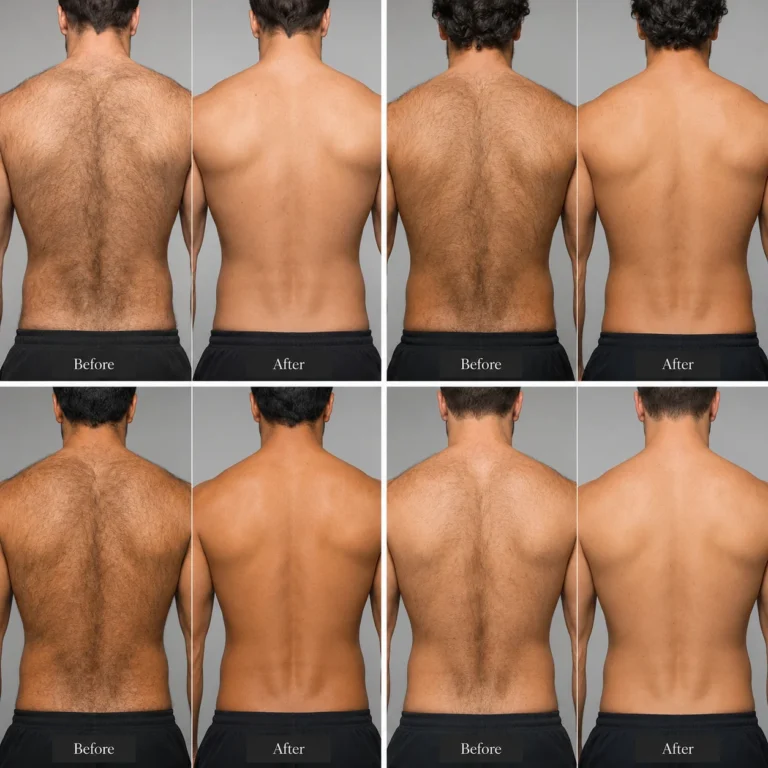
Men having back or shoulder laser hair removal should not leave large patches of long hair simply because those areas are difficult to reach. A body trimmer can shorten very dense hair before careful shaving, and assistance from another person may produce a more even result without repeatedly scraping hard-to-reach skin. Back laser hair removal can cover a large treatment area, so arriving evenly shaved helps the provider work more efficiently and identify the actual skin surface.
Men should arrive for laser hair removal with clean skin and without body lotion, oils, deodorant, cologne, fragranced products, or other topical residue on the treatment area. Clean skin gives the laser provider a predictable surface to assess and prevents potentially irritating products from remaining on skin exposed to laser energy. Underarm laser hair removal is a common example where deodorant should be removed before treatment.
Men using retinoids, glycolic acid, salicylic acid, benzoyl peroxide, strong exfoliants, or prescription acne products should tell their provider before laser hair removal. Active skincare can sometimes leave skin dry, peeling, inflamed, or unusually sensitive, particularly when laser hair removal is performed on the face, beard line, or neck. There is no single stop-date that applies to every ingredient and every patient, so men should follow the specific pre-treatment instructions given for the product they actually use rather than automatically stopping prescription treatment on their own.
Men should disclose prescription medications, over-the-counter drugs, supplements, recent antibiotics, and medications that may increase photosensitivity before laser hair removal. A medication does not automatically mean laser hair removal must be canceled, but the provider needs accurate medical information to determine whether treatment should proceed, be modified, or be postponed. Men should never discontinue prescribed medication solely to qualify for laser hair removal without discussing the decision with the prescribing clinician.
Men should avoid bleaching the hair scheduled for laser hair removal because laser hair removal depends heavily on pigment within the hair as an optical target. Making dark hair artificially lighter can reduce the contrast that helps the laser identify the hair effectively. Men considering laser hair removal should therefore manage visible regrowth with shaving rather than bleaching, waxing, tweezing, or epilating.
Men with tattoos on the chest, back, shoulders, arms, legs, or other laser hair removal areas should point them out before treatment. Hair-removal lasers should not be fired directly over tattoo pigment because tattoo ink can absorb laser energy and increase the risk of unwanted skin injury. A qualified provider can mark the tattoo and establish an appropriate safety margin while treating eligible surrounding skin. Mayo Clinic specifically advises against performing laser hair removal directly on tattooed skin.
Men considering beard, cheek, or neck laser hair removal should establish the desired beard boundary before beginning a treatment series. Laser hair removal produces long-term hair reduction, so repeatedly treating a beard area that may later be wanted for a different beard style can be difficult to reverse. Beard-line laser hair removal is particularly useful for men seeking a cleaner neckline or relief from recurrent razor bumps, but the treatment design should match the long-term grooming goal rather than the beard style worn that week.
Men should mention active irritation, open cuts, infected follicles, significant acne, rashes, or other skin changes before laser hair removal. Laser hair removal should begin on skin that the provider can safely evaluate, and hiding inflammation under clothing does not make the condition irrelevant. Men prone to pseudofolliculitis barbae or recurrent ingrown hairs may ultimately benefit from reducing hair growth, but laser hair removal parameters still need to be chosen according to the skin condition present on treatment day.
Four or more weeks before laser hair removal: Stop waxing, plucking, sugaring, threading, epilating, and electrolysis in the treatment area. Avoid intentional tanning and begin protecting exposed treatment areas from unnecessary UV exposure.
One to two weeks before laser hair removal: Pay attention to sun exposure, self-tanner, irritation, new medications, antibiotics, skin infections, and changes in skincare. Contact the provider if anything has changed since the consultation.
About 24 hours before laser hair removal: Shave the treatment area with a clean razor without repeatedly scraping the skin. Men prone to significant shaving irritation should follow the provider’s recommended shaving timeline instead of forcing a same-day close shave.
On the day of laser hair removal: Arrive with clean skin and no lotion, oil, deodorant, fragrance, or other products on the treatment area. Wear comfortable clothing and tell the provider about recent tanning, medications, skin irritation, or other changes before laser hair removal begins.
Men’s laser hair removal at Skin Aesthetics in Floral Park, New York begins with an evaluation of skin tone, hair color, hair thickness, treatment area, medical history, and individual goals. Skin Aesthetics offers laser hair removal for common male treatment areas including the back, chest, shoulders, abdomen, neck, face, arms, legs, and other areas.
If you are considering laser hair removal for your back, chest, shoulders, neck, abdomen, beard line, or another area, schedule a consultation with Skin Aesthetics in Floral Park, NY. A personalized consultation allows Skin Aesthetics to evaluate your skin and hair, discuss your grooming goals, review medications and recent sun exposure, and create a laser hair removal plan appropriate for your treatment areas.