
Laser Hair Removal for Men's Beard: Results, Pain, and What to Expect
Laser hair removal for men’s beard can reduce facial hair growth, simplify shaving, and help control recurring razor bumps. You can treat the full beard area or focus on unwanted hair outside your preferred neckline and cheek lines. Expect a course of treatments, some discomfort during each session, and the possibility of maintenance later – not a guaranteed lifetime without shaving.
The first decision is how much beard you want to keep. Treating your neck while preserving your beard is a different commitment from reducing hair across your entire lower face. Choose the boundaries with your future grooming preferences in mind.
Full Beard Removal or Beard Shaping: Choose the Area First
“Beard removal” does not describe one standard treatment area. Before booking a package, clarify whether it includes the mustache, chin, cheeks, sideburns, and front of the neck.
| Your goal | Area to discuss | Decision to make before treatment |
|---|---|---|
| Less hair across the lower face | Full beard area, with the mustache and front neck specified | Are you comfortable losing the option of a full beard? |
| A cleaner outline | Hair above the cheek line and below the neckline | Which boundary will still suit you if your style changes? |
| Less neck shaving | Unwanted hair below the beard | Where should the preserved beard end? |
| A less dense beard | Selected beard areas | Would uneven reduction be more frustrating than your current density? |
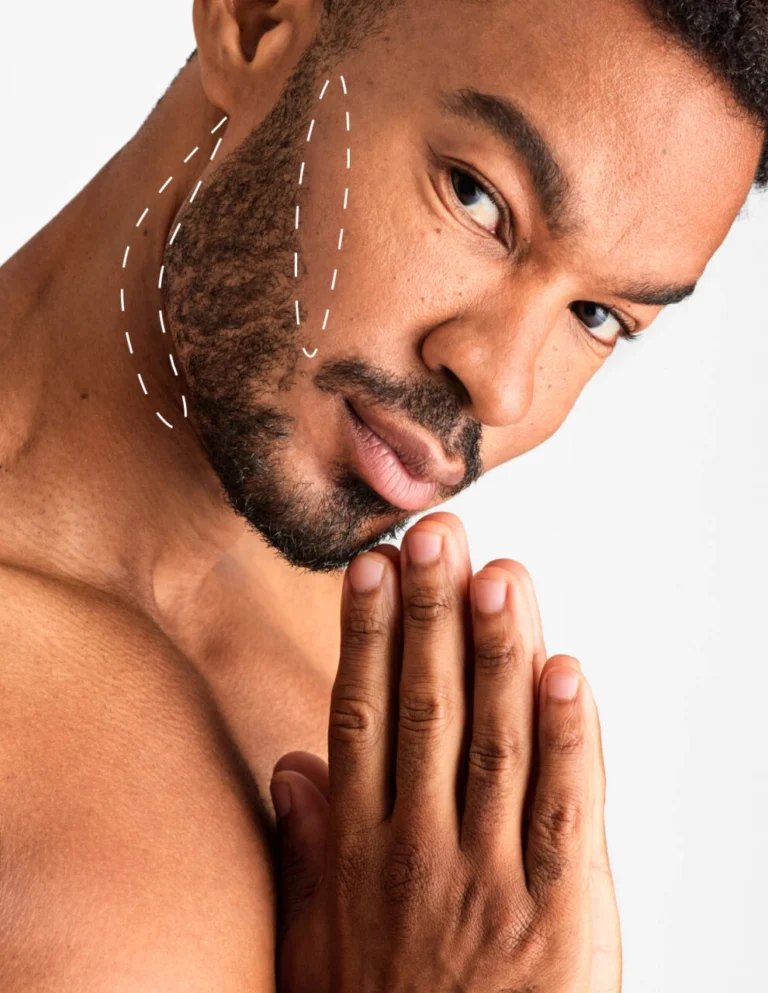
Ask to review the proposed treatment lines in a mirror before the first session. Bring photos showing both your usual beard and the outline you want. If you are undecided, keep the initial plan limited to clearly unwanted areas rather than committing to full-face treatment.
Laser cannot add hair to sparse patches. It also cannot promise an evenly thinned beard at a chosen percentage. If keeping uniform stubble matters, discuss that concern before treating the beard itself.
How Laser Treatment Reduces Beard Hair
The laser delivers light that is absorbed by pigment in the hair. That energy becomes heat and damages the follicle, reducing its ability to produce future growth. Hair follicles cycle through different stages, and treatment targets pigmented hair most effectively during active growth. A single appointment cannot treat every follicle at the ideal stage.
Treated hairs do not all disappear when you leave the appointment. They shed over the following days to weeks. During a course, the beard may look uneven as some areas lose hair while others continue growing. Assess progress after shedding and regrowth, rather than judging the result by how smooth your skin looks immediately after treatment.
What Happens During an Appointment?
- Confirm the treatment plan. Review the hair you want removed and the beard you want preserved. Report changes in your skin, medication, or sun exposure since the previous visit.
- Prepare the skin. The area is cleaned, and hair length is checked. Arrive without beard oil, aftershave, or styling products on the treatment area, following the clinic’s preparation instructions.
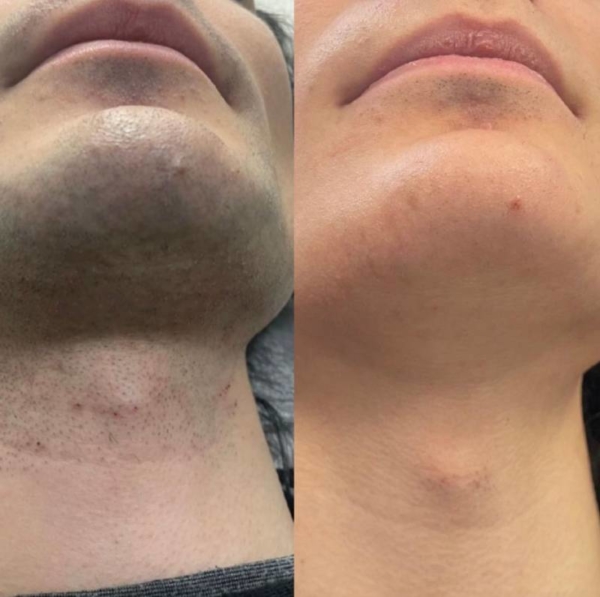
- Protect your eyes. You and the operator wear appropriate protective eyewear. Closing your eyes alone is not protection.
- Treat the agreed areas. The provider applies laser pulses with cooling and monitors your response. Treatment time depends on the size of the area; a narrow neckline and a full beard are different appointments.
- Review aftercare. Before leaving, confirm when to shave, which products to pause, and whom to contact if you develop a skin reaction.
Treatment requires skin assessment and appropriate eye protection.
Who Is a Good Candidate?
Dark, coarse facial hair offers a useful pigment target. Blonde, white, gray, and red hairs do not respond reliably to laser hair removal. If your beard is partly gray, reducing its darker hairs can leave the lighter ones visible. Electrolysis is an alternative to discuss for light-colored hairs because it does not depend on hair pigment.
Men with darker skin can also be candidates, but laser selection, settings, and experience with that skin tone matter. Long-pulsed Nd:YAG is commonly considered for darker complexions because of its lower absorption by epidermal melanin. A recent tan still needs assessment; a device suitable for dark skin does not make freshly tanned skin ready for treatment.
At consultation, disclose medications, recent tanning, a tendency to develop raised scars, and any history of cold sores. Include acne treatments and nonprescription products. Do not stop prescribed medication on your own; ask the treating professional to review it.
Does Laser Beard Removal Hurt?
It can. Expect brief hot pinpricks or snapping sensations rather than a painless facial. Cooling helps protect the skin and reduce discomfort, but it does not eliminate every sensation. Ask about comfort measures before the appointment if pain is a concern.
Tell the provider immediately if discomfort becomes difficult to tolerate or feels like sustained burning. There is no benefit to silently enduring excessive pain. The provider can pause and assess your skin and treatment settings.
If a topical anesthetic is appropriate, the provider should give you instructions for the product, amount, and timing. Do not improvise with a strong numbing cream before arriving.
How Many Sessions Will You Need - and Will Hair Grow Back?
Plan for several appointments over months. The American Academy of Dermatology notes that removing unwanted hair can take six sessions or more. This is general guidance, not a promise that six sessions will remove a dense beard.
Appointments are often spaced about four to six weeks apart initially, with timing adjusted to your response. Long-term reduction can last months or years, but some hair may return and maintenance may be needed.
Define success before starting: fewer neck bumps, less frequent shaving, or a substantial reduction across the face. Those goals require different assessments. Take progress photos in consistent lighting and at a similar interval after shaving so you are comparing growth rather than different lengths of stubble.
Can It Help Razor Bumps and Beard Shadow?
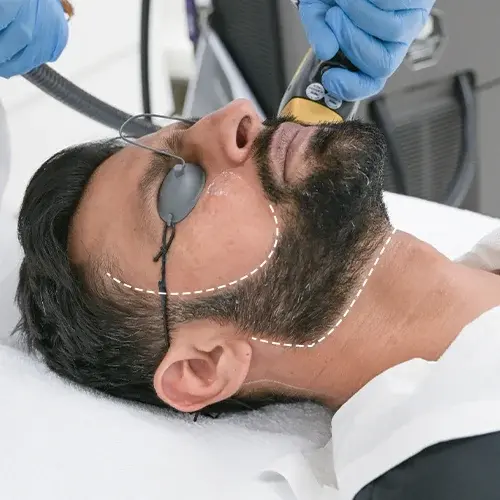
Razor bumps, or pseudofolliculitis barbae, develop when cut hairs curve back into the skin. Coarse, curly beard hair is particularly prone to this problem. Reducing the hair responsible can reduce recurring bumps and the need to shave those areas.
However, existing scars and dark marks are separate concerns. Ask the provider to distinguish visible hair shadow from discoloration left by inflammation before setting expectations. Removing hair should not be presented as a guarantee that every mark will disappear.
How to Prepare and Care for Your Skin
Before treatment, avoid tanning and self-tanners. Stop waxing, plucking, and electrolysis in the planned treatment area at least four weeks beforehand, or follow a longer interval if instructed. Shaving is generally recommended the day before treatment because it leaves the follicular target in place while shortening surface hair.
If shaving leaves cuts or significant irritation, contact the clinic before your appointment. Ask when to pause retinoids, exfoliating acids, or irritating acne products; the instructions should reflect the products you actually use.
After treatment, handle your skin gently. Use a cool compress for discomfort, avoid scrubbing, and follow the provider’s advice about skincare and returning to shaving. Do not force out shedding hairs with tweezers.
There is no single shaving schedule suitable for every skin reaction. Wait until the skin has settled and follow your provider’s instructions. If it remains tender or irritated, check before using a razor.
Protect the treated area from direct sun throughout the course. Use broad-spectrum, water-resistant SPF 30 or higher when outdoors, including your neck.
Book a Beard Hair Removal Consultation in Floral Park
Skin Aesthetics offers men’s laser hair removal at 10 Verbena Avenue,
Floral Park, NY 11001, serving clients from Queens and Long Island. Skin Aesthetics
Bring a photo of your preferred beard outline and explain what bothers you most: neck irritation, frequent shaving, or unwanted facial hair. Ask for a treatment-area map, an estimate of the course, and a quote that specifies whether the mustache and front neck are included. Confirm the cost of any later maintenance separately.
Request a consultation or call (718) 664-0284 to discuss your goals before committing to treatment.