
Laser hair removal can be done year-round, including during the summer. The important issue is not the season – it is the condition of your skin. A recent tan, sunburn, or unprotected UV exposure can make treatment less predictable and raise the chance of irritation or pigment changes.
With a smart plan, you can protect your skin, keep your appointments on track, and still enjoy time outdoors. Here is what sun exposure changes, how to prepare for a session, and what to do after treatment.
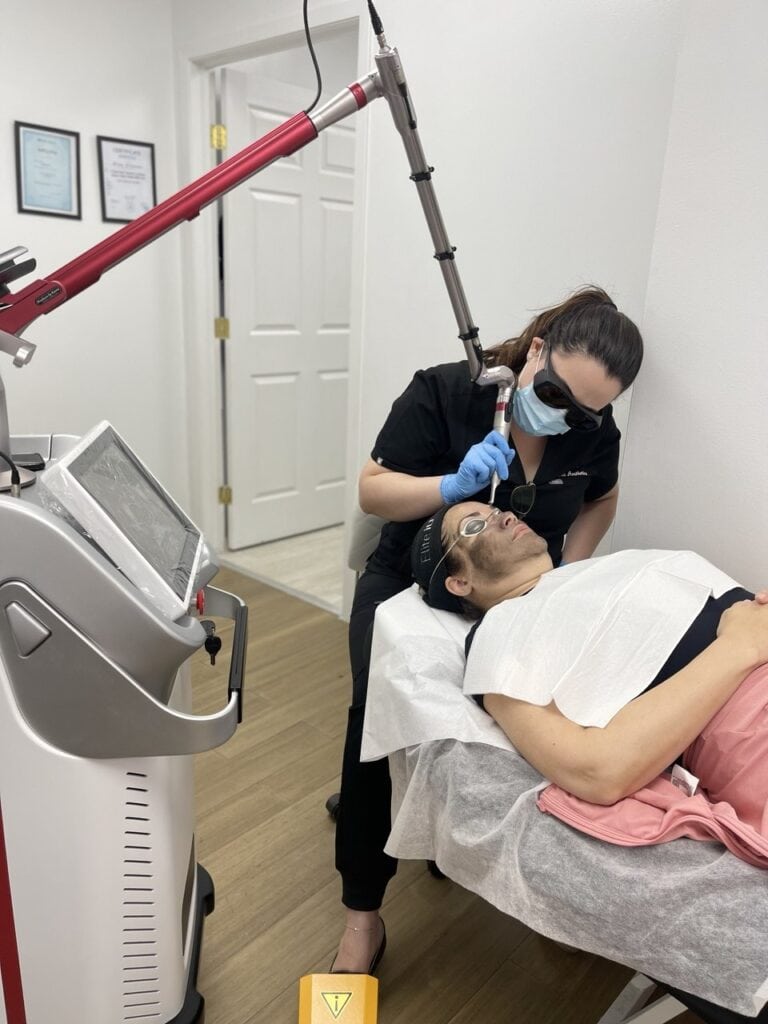
Laser hair removal uses focused light that is absorbed by melanin, the pigment that gives hair its color. That energy heats the follicle to reduce future growth. But melanin is also present in skin – especially after tanning.
When skin is tanned or sunburned, more laser energy may be absorbed closer to the surface rather than being directed primarily toward the hair follicle. This can make a treatment less effective and increase the risk of unwanted reactions, including:
The right laser type, settings, cooling method, and provider experience all matter. Modern technology makes laser hair removal possible for a wide range of skin tones, but it does not make a fresh tan or sunburn irrelevant. Your provider needs to evaluate your skin at every appointment.

Yes. Summer laser hair removal is not automatically unsafe. What matters is whether you can avoid intentional tanning, prevent sunburn, and follow your provider’s pre- and post-treatment instructions.
In fact, starting in summer can still make sense. Laser hair removal requires a series of sessions because hair grows in cycles, and treating on schedule helps capture hairs during the active growth phase. If you have a beach vacation, pool days, or outdoor work planned, tell your provider early. They can help you time treatment safely or recommend rescheduling when needed.
There is no single timeline that fits every person, body area, laser system, or skin tone. Many practices ask patients to avoid direct sun exposure and tanning for at least two weeks before a session; others use longer timelines. The safest rule is to follow the instructions from the clinician performing your treatment.
Before your appointment, avoid:
If you develop a noticeable tan or any sunburn, contact the clinic before your visit. Do not assume it is safe to proceed. Your provider may examine the area, perform a test spot, adjust the treatment plan, or postpone the session until the skin has fully recovered and returned closer to its baseline tone.
You do not need to stay indoors. Instead, make UV protection part of your routine:
Sunscreen is important, but it is not permission to tan. No sunscreen blocks 100% of UV radiation, and a visible tan still changes the way skin may respond to laser energy.
It is normal for treated skin to look pink or feel warm for a short time. Small, temporary bumps around follicles can also occur. The skin barrier may be more reactive immediately after treatment, so treat the area gently.
For the first few days – or longer if your provider directs – avoid direct sun exposure to the treated area. Skip tanning beds completely. When you need to be outside, use protective clothing and broad-spectrum SPF 30 or higher once your provider says sunscreen is appropriate for the area treated.
Medical guidance varies by individual and procedure. For example, Mayo Clinic advises protecting treated areas from sun exposure between sessions for six weeks or as directed by a healthcare professional. Your own provider’s protocol should take priority because they know your skin type, the device used, the treatment settings, and how your skin responded.
Call your provider promptly if you develop blistering, significant swelling, worsening pain, drainage, or skin color changes that concern you.
First, do not panic – but do not hide it from your provider. The next step depends on whether the skin simply had incidental exposure, developed a tan, or became sunburned.
If you have an upcoming session, call the clinic and describe exactly what happened: when the exposure occurred, which area was exposed, whether you are visibly darker, and whether there is any redness, peeling, or tenderness. Photos may help the clinic advise you, but they are not a substitute for an in-person assessment when one is needed.
If you are already healing from a laser session and get too much sun, stay out of further direct sun, use gentle skin care, and contact your provider if you notice a strong reaction. Do not try to “correct” a tan with scrubs, chemical exfoliants, or aggressive home treatments.
No. Tanning beds and sun lamps expose skin to UV radiation and can create the same core problem: additional pigment and inflammation in the skin. They should be avoided before and after laser hair removal. The American Academy of Dermatology specifically advises patients not to use tanning beds, sun lamps, or other indoor tanning equipment after treatment.
Everyone needs sun protection, but treatment planning should be individualized. Darker skin naturally contains more melanin, so choosing an appropriate device and an experienced provider is especially important. A provider may use a different wavelength, more conservative settings, or a test spot to balance safety and effectiveness.
This is also why a tan matters for every skin tone: it is a change from your own baseline. Be candid about your natural skin tone, recent travel, outdoor activities, tanning products, medications, and any history of dark marks after acne, cuts, or cosmetic procedures.

If your trip will involve beaches, hiking, boating, a sunny resort, or any activity where you are likely to tan, schedule thoughtfully. A practical approach is to avoid booking a laser session immediately before a sun-heavy vacation. Give yourself enough time to follow your clinic’s aftercare rules and protect the area without stress.
When you return, wait until any tan has faded and any sunburn is completely healed before your next treatment. Contact your provider rather than guessing. Missing or moving one session is usually safer than treating compromised skin.
Yes - daily broad-spectrum sunscreen is generally encouraged in the weeks leading up to treatment. On the day of your appointment, arrive with clean skin and follow the clinic’s specific instructions about lotions, sunscreen, deodorant, makeup, or other products on the treatment area.
Yes, but avoid direct sun on the treated area and protect it carefully. Cover up, seek shade, and follow your provider’s instructions on when and how to use sunscreen.
Possibly, but do not assume it is safe. Let the clinic know before your appointment. Depending on the depth of the tan, your skin tone, the body area, and the technology used, the provider may perform a test spot, alter the plan, or postpone treatment.
Possibly, but do not assume it is safe. Let the clinic know before your appointment. Depending on the depth of the tan, your skin tone, the body area, and the technology used, the provider may perform a test spot, alter the plan, or postpone treatment.
You do not have to put laser hair removal on hold simply because it is summer. The key is to avoid tanning and sunburn, protect exposed skin every day, and be transparent with your provider about recent UV exposure. A qualified professional can adjust your treatment plan based on your actual skin – not just the calendar.
If you are considering laser hair removal, schedule a consultation to discuss your skin tone, hair color, lifestyle, travel plans, and the right pre- and post-care routine for you.